
Contents / Choose a section
The contractor you enjoy talking to may not be the right team for your project. The cheapest quotation may also cover less work than its competitors. Before committing, ask what the price includes, who is responsible and how completion will be checked. This guide follows the decision from shortlisting to handover so the important questions are settled before demolition or payment.
The key idea
Confidence should come from verifiable evidence and clear agreements, rather than a promise to take care of everything.
CHOOSE YOUR TEAM / 01
Look beyond the handover photo
Comparable projects tell you more than a beautiful portfolio alone.
- Ask for similar project conditions and the exact scope the team delivered.
- With permission, ask a previous client about problem-solving and aftercare.
Read the details and considerations
Start with your actual conditions: an occupied house, an apartment fit-out or a commercial interior. Access hours, dust control and building coordination vary. Ask for a comparable project and identify exactly which parts the contractor delivered.
Handover photographs show appearance, but not schedule control or aftercare. With permission, speak to a previous client and look at a project that has been in use. Ask what went wrong and how the team responded.
A useful question is: “What was difficult on that project, who decided how to resolve it, and what detail changed?” A specific answer gives you more evidence than an assurance that everything always goes smoothly.

CHOOSE YOUR TEAM / 02
Know who signs and who supervises
The person selling, signing and supervising may be three different people.
- Verify the contracting party and signing authority.
- Identify the coordinator and site lead; request a sample progress report.
Read the details and considerations
Confirm the legal name, address, contact details and signing authority. For a Thai company, DBD DataWarehouse+ can help verify registration. Registration establishes identity; it does not certify workmanship or delivery capability.
The person selling the project may not supervise it. Identify the coordinator, site lead and specialist teams, including subcontractors. Know who answers questions and who can authorise changes.
Ask for an example progress report: site photographs, decisions awaiting approval and the next work period. A simple, consistent report is more useful than an elaborate system nobody maintains.
Further context: กรมพัฒนาธุรกิจการค้า / DBD DataWarehouse+

CHOOSE YOUR TEAM / 03
Compare the scope before the total
A lower total may simply include less work.
- Give every bidder the same drawings and specifications.
- Review exclusions and ask why individual prices differ.
Read the details and considerations
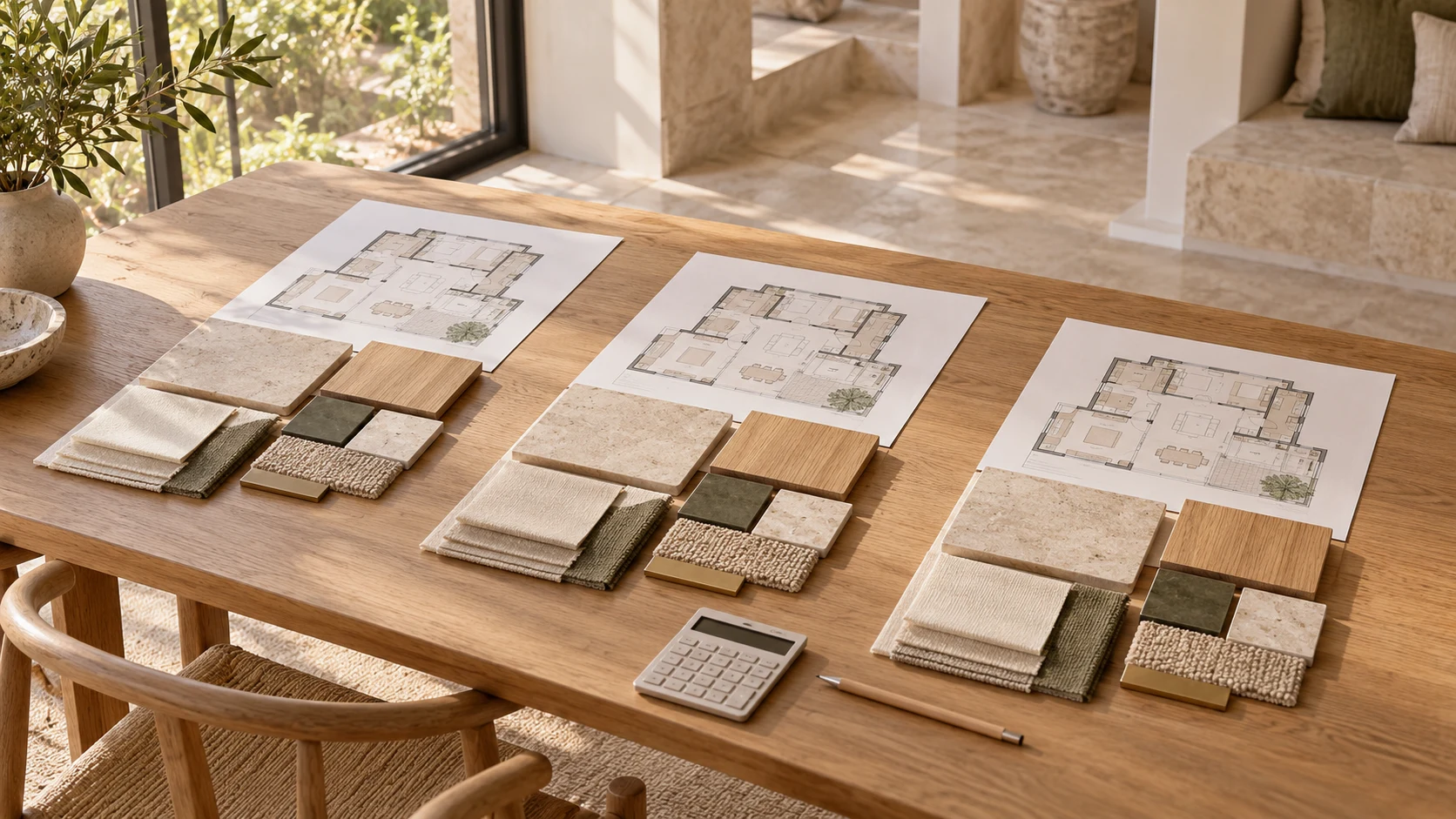
Give every bidder the same drawings, specifications and scope. If the design is incomplete, mark provisional items and when they will be confirmed. Different inclusions make headline totals misleading.
Review exclusions such as demolition, disposal, levelling, electrical relocation, waterproofing, fittings and making good. Compare inclusions line by line and ask about blanks instead of assuming.
When prices differ substantially, request an itemised explanation. The difference may be a product grade, quantity or method. Budget reduction should be an explicit design decision, not an undisclosed downgrade.
CHOOSE YOUR TEAM / 04
Pay against verifiable progress
Before each payment, know which work or evidence you will inspect.
- Define a deliverable rather than saying “half finished.”
- Agree the inspection process and retain payment records; deposits depend on the actual work.
Read the details and considerations
Thailand’s OCPB advises careful review of contracts and initial payments because large advances without evidence of progress increase exposure. Understand what each payment funds and what evidence will support it.
Replace “half finished” with a defined deliverable, such as inspected services or installed cabinets ready for detailed review. Agree who checks the work, how defects are reported and what triggers the next payment.
There is no single appropriate deposit for every project. Custom production and procurement create different needs. Ask for an explanation, retain receipts and payment records, and have the contract reviewed for the actual work involved.
Further context: สคบ. / คำแนะนำก่อนว่าจ้างผู้รับเหมา

CHOOSE YOUR TEAM / 05
See the full effect of a change
One change can affect several trades at once.
- Separate hidden conditions from owner-requested changes.
- Review cost, schedule and drawing revisions before approval.
Read the details and considerations
Renovation can expose hidden conditions. Agree in advance how they will be documented, who reviews them and how revised cost is approved before work proceeds. Separate discovered conditions from owner-requested changes.
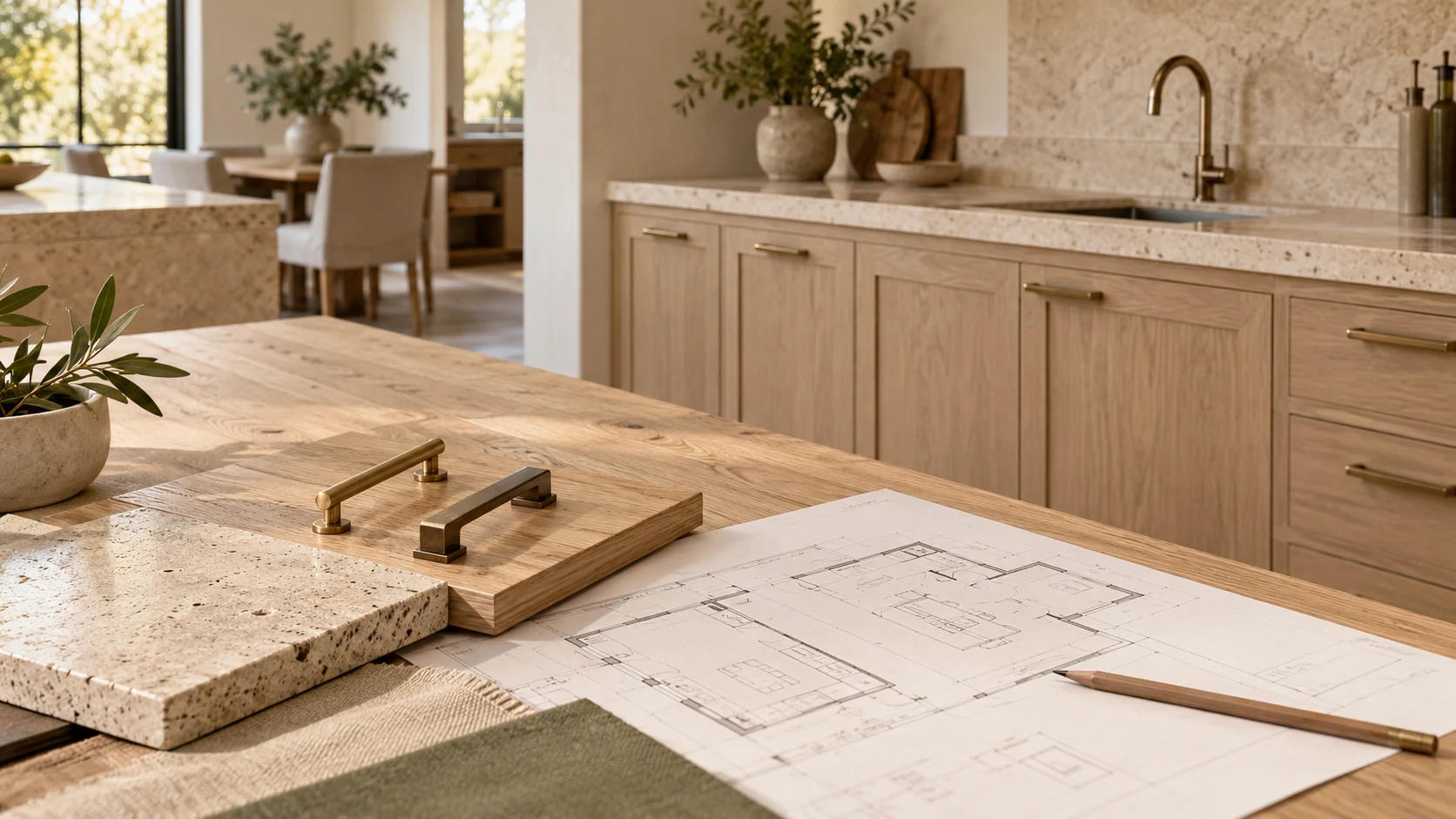
“Do it now and price it later” leaves an unclear record. Use a change document identifying scope, reason, cost and schedule effect, with the agreed approval process. Keep everyone on the same drawing revision.
Hypothetical example: moving a sink can affect pipes, finishes, cabinetry and outlets. Review the whole change rather than the cabinet alone so its real cost can be weighed against the benefit.
CHOOSE YOUR TEAM / 06
Hand over a home that works
A good-looking finish also needs to work properly.
- Test operation and record defects, responsible parties and reinspection dates.
- Keep manuals, warranties and maintenance information for later.
Read the details and considerations
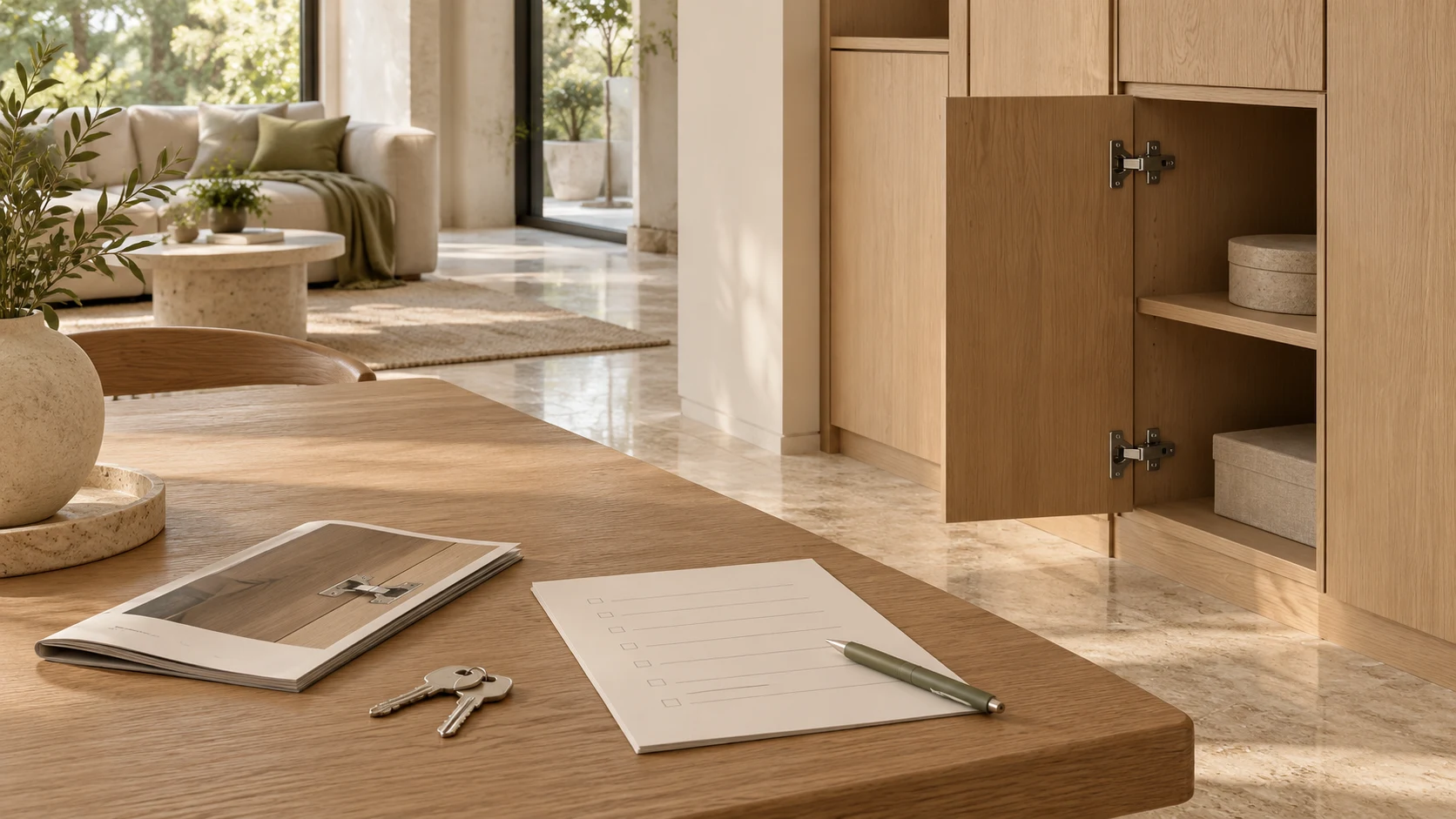
Agree a handover checklist before the date arrives. Check cabinet movement, finish joints and functional water or electrical points; involve competent specialists for services. Overall appearance is not a substitute for operation testing.
Record defects with locations, responsible parties and correction dates. Request manuals, warranty information, maintenance details and as-installed drawings where included in scope.
A suitable team does not eliminate risk, but it welcomes verification, discusses difficult issues and records decisions. Resolve responsibility, inclusions and acceptance criteria before work starts.
Test before committing
Ask every shortlisted contractor the same question: if demolition reveals an unpriced problem, who is informed, what evidence is provided and how is approval obtained? Their answers reveal working methods better than another discount request.
Inputs to bring to your design team
- 01A defined scope and drawing revision
- 02Comparable work and the team’s actual involvement
- 03Contracting party, signatory and site lead
- 04Inclusions, exclusions and deliverable-based payments
- 05Change approvals, acceptance and warranty procedures
Sources and context
These articles combine general guidance with NERAMIT design recommendations. Examples are hypothetical, not client projects or quotations. Supporting sources are identified by section. Contracts, quantities, prices and installation details need project-specific review.
Continue reading
← Back to all articles