Contents / Choose a section
When a wish list exceeds the budget, do not cut every item equally. Some affect safety, some enable everyday use, and others can wait without reopening completed work. Priorities clarify the next conversation.
The key idea
Set priorities by consequences and dependencies, as well as appearance.
PREPARING TO RENOVATE / 01
Assess issues that need attention first
Building-condition issues should influence scope rather than disappear behind decoration.
- Collect observations needing assessment
- Have professionals define necessary work
Read the details and considerations
Leaks, unusual service behaviour and structural concerns need appropriate assessment. Do not exclude them simply because they are absent from the finished image. Record inspection needs and effects on occupancy.
This priority framework is not a remote safety assessment. Use actual findings to agree the scope, method and sequence with the responsible team.

PREPARING TO RENOVATE / 02
Resolve daily friction
Functional work needs a clear explanation of what it improves.
- Link work to the main problems
- Describe the consequence of omission
Read the details and considerations
If the problem is insufficient preparation space, changing cabinet colour alone may not help. Define the needed outcome and compare ways to achieve it; not every cabinet is essential.
Use routine evidence, such as moving appliances before every meal. Priorities should follow your household rather than a universal list.

PREPARING TO RENOVATE / 03
Review dependencies
An item installed later may need preparation earlier.
- Review sequencing before finishes close
- Compare early preparation with later reopening
Read the details and considerations
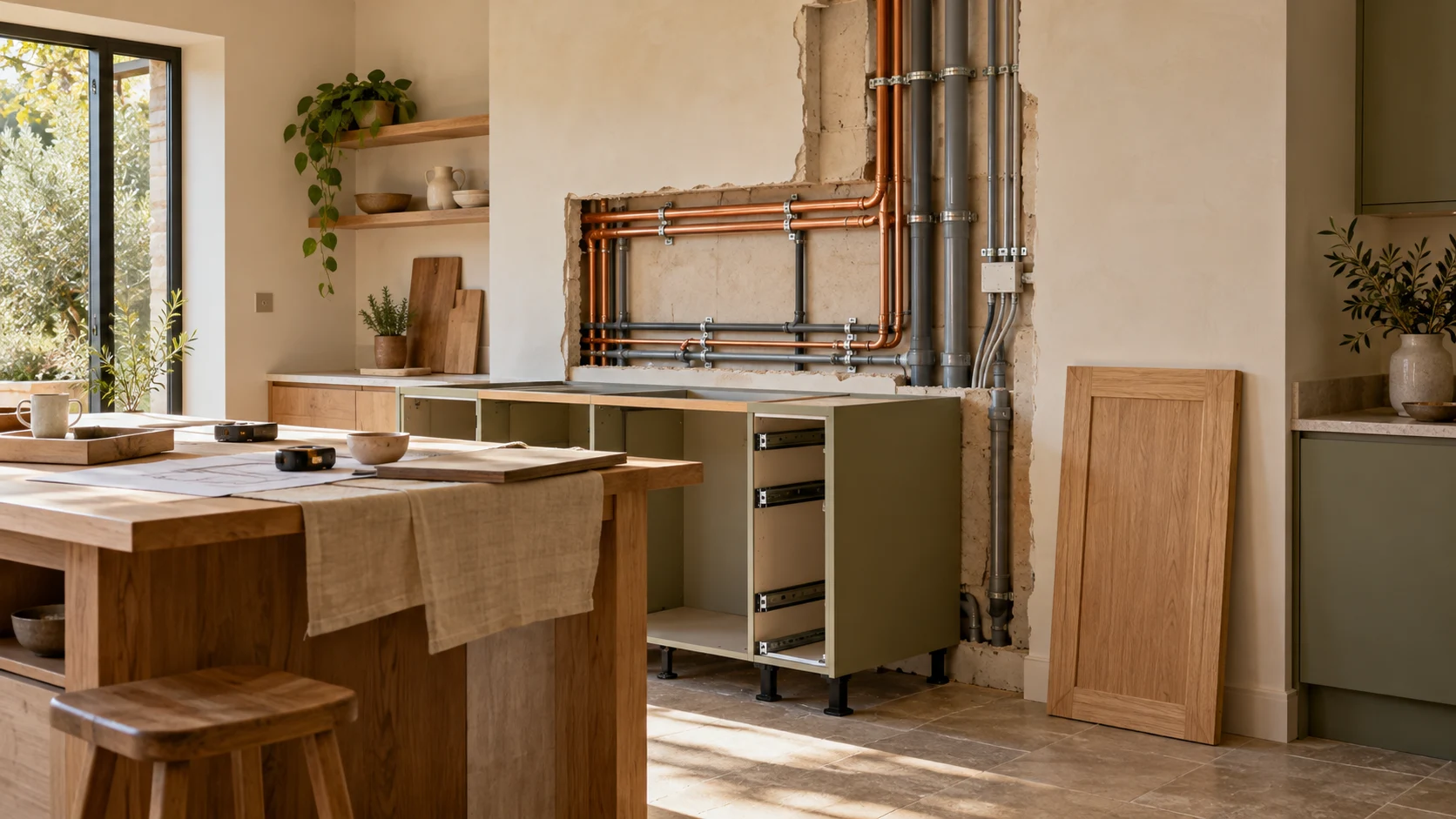
Coordinate services and interfaces with cabinetry or finishes before phasing work. Ask which items can wait and which need preparation, rather than designing services yourself.
Avoid preparing for every possibility. Link preparation to plausible plans and verified details, with decision points before difficult-to-reverse stages.
PREPARING TO RENOVATE / 04
Choose quality according to use
Simplifying selected details may work better than choosing the cheapest option everywhere.
- Review use and maintenance
- Compare alternatives on equal scope
Read the details and considerations
Materials and fittings should suit use. Review specifications, maintenance and inclusions, and ask how lower-cost options change the result.
Simpler forms or fewer elements may preserve function. Do not cut safety-critical or essential service work without assessment. Compare complete deliverables rather than material prices alone.

PREPARING TO RENOVATE / 05
Phase work into usable stages
Each stage should leave a usable result rather than an indefinite unfinished home.
- Define what is usable after each stage
- Account for remobilisation and protection
Read the details and considerations
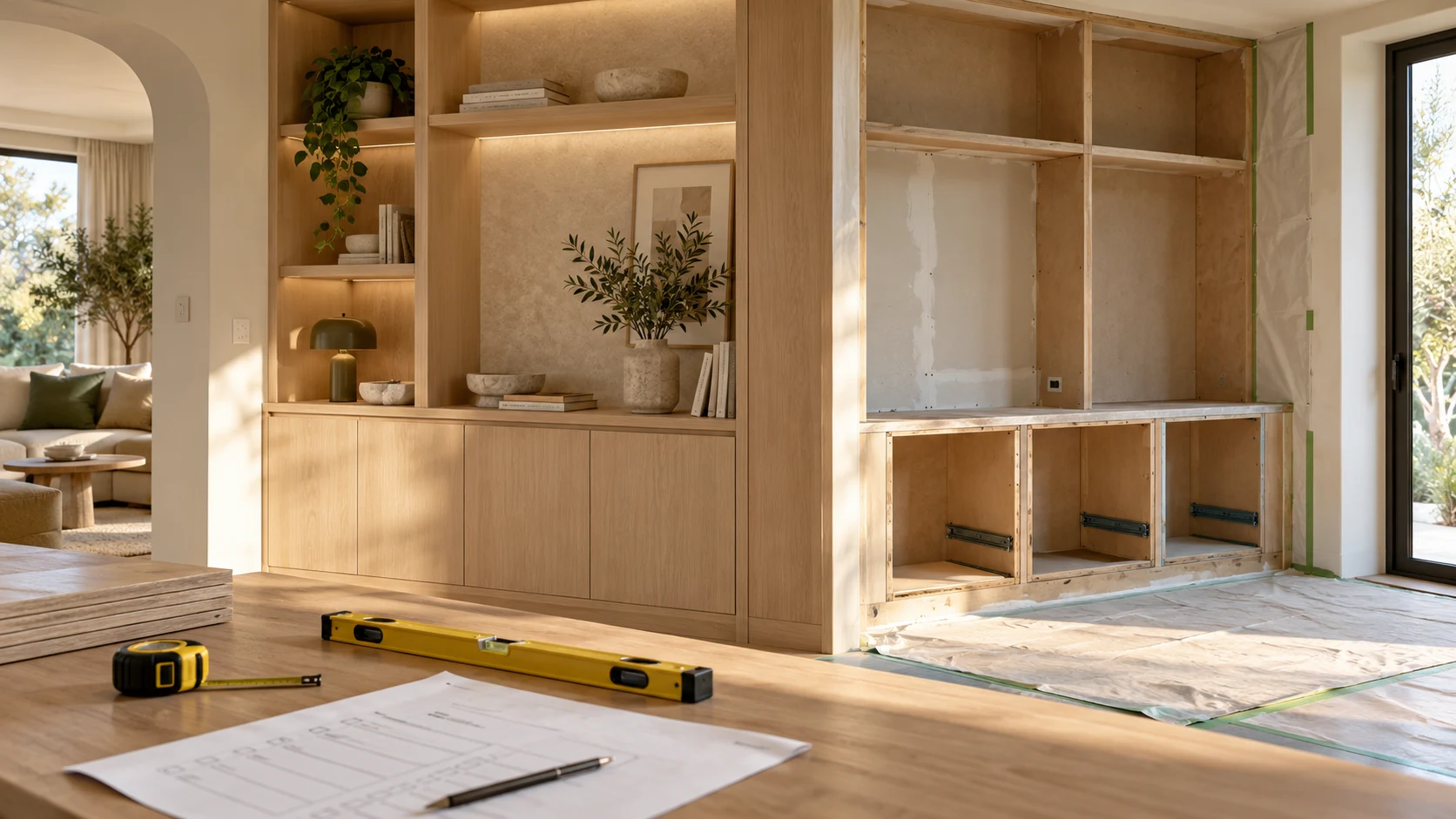
Some decoration or furniture can be bought later. Construction phasing also needs access, dust, noise and protection planning. Agree each stage’s handover and limitations.
Phasing does not guarantee a lower total cost. Remobilisation and reopening may add expense. Compare the total with cash-flow and occupancy needs.
PREPARING TO RENOVATE / 06
Create a shared decision list
Shared priorities reduce accidental returns to earlier decisions.
- Label essential, recommended, optional and later
- Record consequences of priority changes
Read the details and considerations
Use an item / reason / consequence of delay / dependencies / decision table. Review it with the household and team. Pending assessment is not a reason to silently defer an item.
When budgets change, update scope and priorities together and keep a confirmed version for design and quotations. NAHB supports prioritising needs and wants; this worksheet is NERAMIT’s practical adaptation.
Further context: NAHB / Thinking About Home Remodeling? Start Here

Test before committing
Hypothetical example: funds cannot cover both a functional kitchen upgrade and display cabinetry. Prioritise the kitchen, then assess whether display storage can wait without disturbing services or reopening finishes.
Inputs to bring to your design team
- 01Assessment needs
- 02Main problems to resolve
- 03Dependencies
- 04Quality alternatives
- 05Usable results by stage
- 06Agreed priority list
Sources and context
General guidance and NERAMIT working recommendations, newly adapted from recorded lessons. Examples are hypothetical, not client projects or quotations. International sources provide context, not Thai law or standards. Condition, services, scope and costs require project-specific assessment.
Continue reading
← Back to the knowledge library